In Action
, News
10 / 14 / 2026
For the Future of Food in Kahnawà:ke
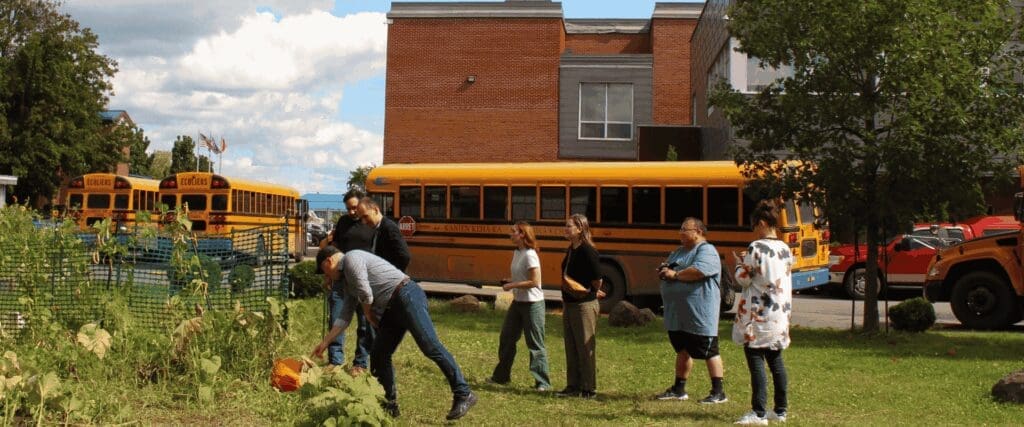
This is no ordinary Thursday for the Greater Montreal Climate Fund. We’re hitting the road for Kahnawà:ke to see up close the initiatives taking root in the name of the community’s food security and food sovereignty. Behind them is a passionate team we are honoured to support: Kahnawà:ke Collective Impact.
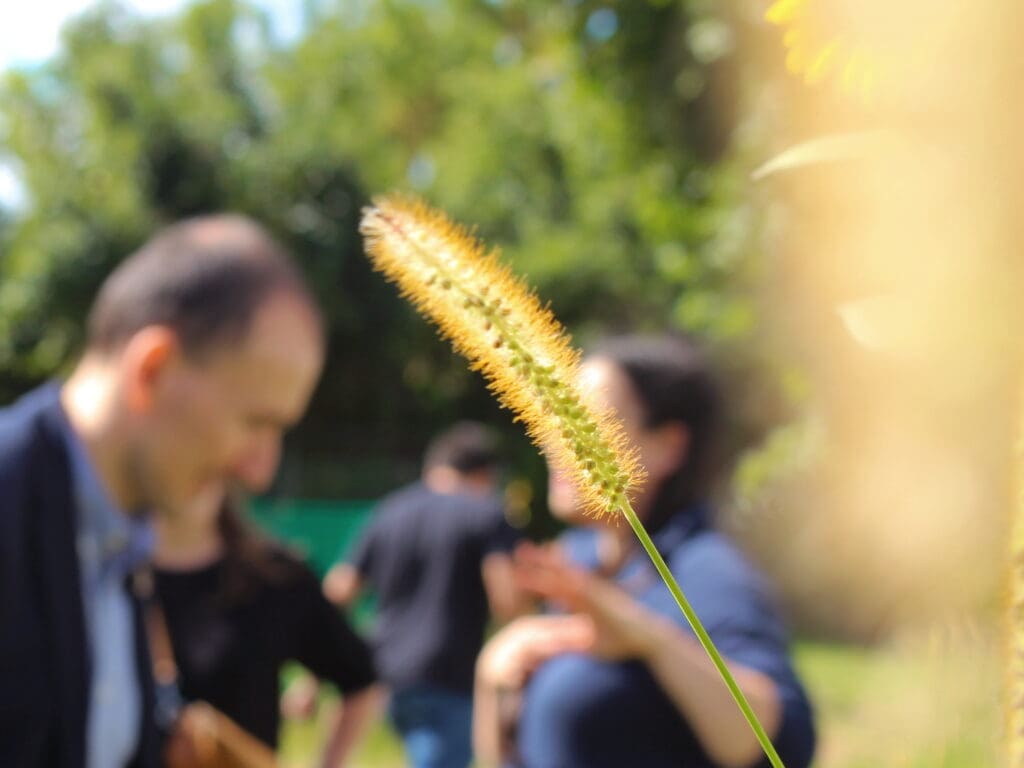
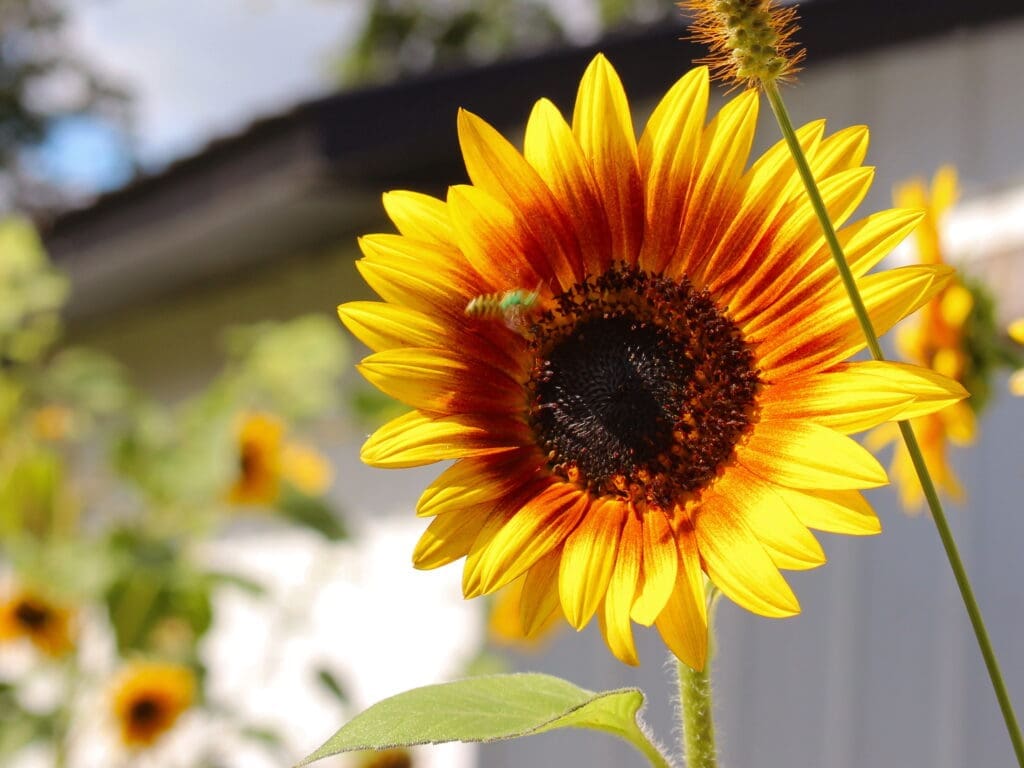
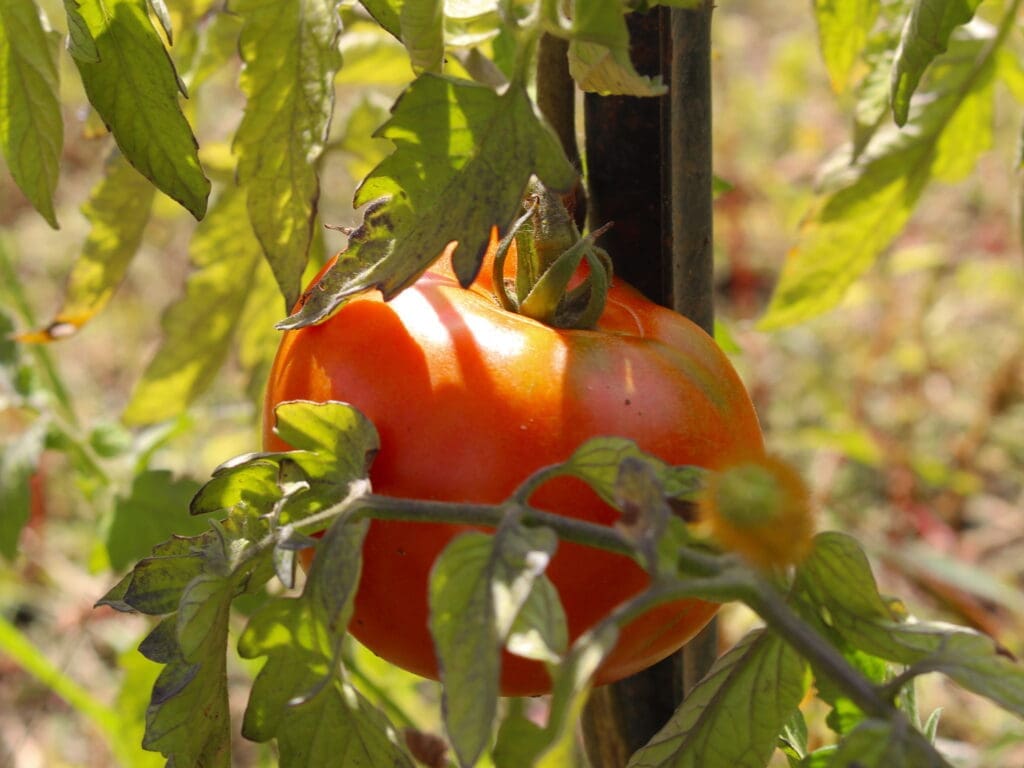
In the yard of Kateri elementary school, where our visit takes place, the end of the harvest can be sensed in the rows of pumpkins, tomatoes, sunflowers and tobacco. This summer, the garden grew on an unprecedented scale and became a true open-air classroom, an immersive learning space for staff and students alike.
At the heart of this achievement is Brittany McComber. As Food Security Facilitator at Kahnawà:ke Collective Impact, she led the Helping Hands project this summer. The goal: to bring the community’s existing gardens back to life and rekindle a love of gardening, in keeping with traditional teachings.
Here at Kateri School, but also in the yards of daycares and seniors’ residences in Kahnawà:ke, Brittany’s horticultural expertise has borne fruit. Working alongside her, young and old have built up the knowledge to tend the plots, harvest them and save seeds. These are skills they, in turn, can sow throughout the community.
The gardens turned into something different, but all of them promoted a healthy lifestyle and served as an educational tool for children and adults alik
Brittany McComber
Food Security Facilitator at Kahnawà:ke Collective Impact
At a time when climate change is weakening food systems, strengthening Kahnawà:ke’s capacity to produce local, nutritious and culturally meaningful food remains essential. This is the vision that guides the work of Kahnawà:ke Collective Impact. In just one year, the organization has supported several community gardens and multiplied concrete actions for a stronger, more resilient food system: 1,400 pounds of fresh produce distributed, 500 fruit plants given away and 100 gardening tools handed out to the community.
Added to this are numerous engagement and dialogue activities, which have allowed the Mohawk community to reflect collectively on its future and its food autonomy, including the food-producing potential of the parcel of land the federal government is in the process of returning to it.
But Kahnawà:ke Collective Impact has no interest in claiming the spotlight. “Everything we do, we don’t do it for ourselves, but for them,” says Lou-Ann Stacey, the organization’s executive director. A phrase that perfectly sums up her team’s philosophy: working with the community and for the community to strengthen collective well-being.
Behind every garden, every harvest and every piece of knowledge passed on lies the same ambition: to build a stronger, more self-reliant community, better prepared for climate challenges thanks to a resilient food system.
Everything we do, we don’t do it for ourselves, but for them.
Lou Ann Stacey
Director of Operations and Project Strategy at Kahnawà:ke Collective Impact
At the Greater Montreal Climate Fund, we are convinced that the climate leadership of First Peoples must be recognized, supported and valued in order to build a transition that is truly just, equitable and grounded in reconciliation. It is with deep gratitude that we move forward alongside Kahnawà:ke Collective Impact.
The work of Kahnawà:ke Collective Impact powerfully demonstrates that climate action cannot be separated from the preservation of culture, language, and collective well-being. By strengthening the community’s food sovereignty, KCI is building resilience that is environmental, social, cultural, and economic all at once. Our visit to Kahnawà:ke left us with an even stronger conviction: the most sustainable climate solutions are those that take root in the values, knowledge, and aspirations of the communities themselves.
Anne-Sophie Evoy
Manager of Grants and Strategic Initiatives at the Greater Montreal Climate Fund
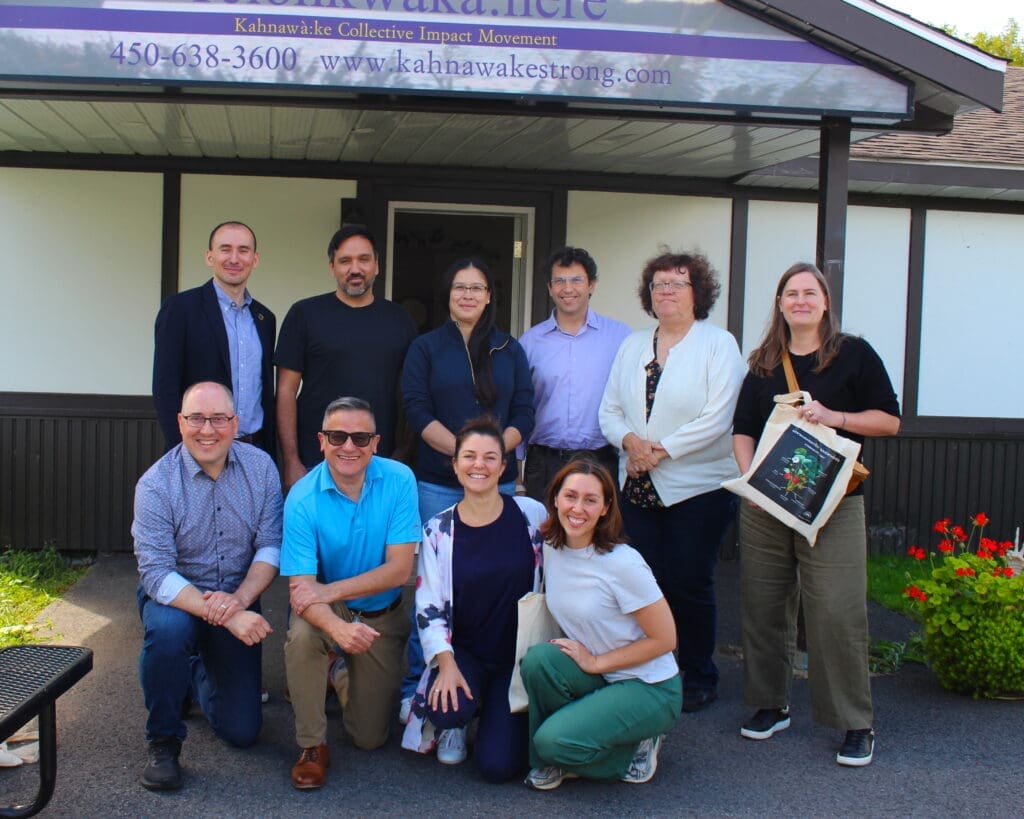
A dedicated team
for food security and food sovereignty in Kahnawà:ke
Spaces for dialogue created
to reflect collectively on food sovereignty
Revitalized gardens
throughout the community
1 400
books of fresh produce distributed
500
fruit plants donated